Why Is Healthy Skin “Weakly Acidic”?
6 Feb 2026 • 加賀 裕章
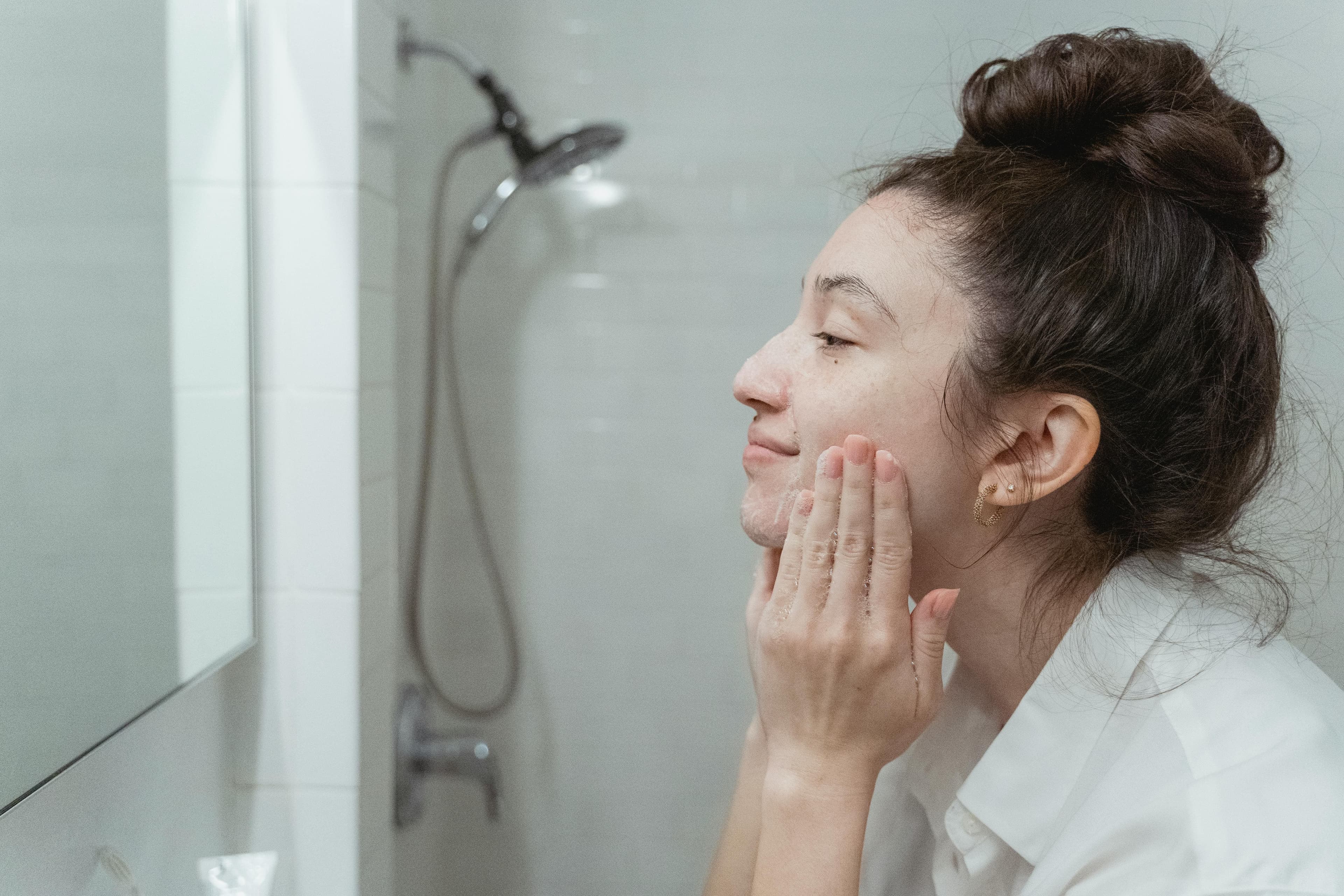
Why Healthy Skin Is Naturally Weakly Acidic
Studies in skin science have shown that the surface of healthy skin is usually kept at a weakly acidic pH, most often around 4 to 6.
This is not a coincidence. It reflects the combined influence of many factors, such as skin sebum and sweat, the structure of the outermost skin layer, enzyme activity inside the skin, and the microorganisms that naturally live on the skin surface.
Factors That Maintain Skin Surface pH
Sebum, Sweat, and the Outer Skin Layer
Sebum and sweat, together with the structural components of the outermost skin layer, contribute directly to maintaining the skin’s weakly acidic environment.
Enzyme Activity and Skin Microorganisms
Enzyme-driven reactions within the skin and the activity of microorganisms that naturally live on the skin surface also play an important role in shaping skin surface pH.
How Weak Acidity Supports Skin Function
When skin remains weakly acidic, lipids that fill the spaces between cells in the outer layer of the skin are produced more efficiently, helping the skin retain moisture.
This environment is also associated with limiting the overgrowth of potentially harmful microbes and keeping natural skin shedding in balance.
pH Alone Does Not Define Cleanser Quality
That said, the quality of a facial cleanser cannot be judged by pH alone.
In this article, we use simple diagrams to explain why a weakly acidic environment fits with how skin works from a scientific point of view.
How This Article Is Structured
Each section includes illustrations for readers who would like to explore these mechanisms in more detail, making the content easier to follow step by step.
Common Perceptions About Weakly Acidic Cleansers
When people hear the phrase “weakly acidic cleanser,” many immediately think of something that feels gentle or mild to the skin.
These impressions are often shaped by marketing, yet there is surprisingly little everyday explanation of why skin is weakly acidic or how that acidity relates to skin function.
Why “Weakly Acidic Is Better” Is an Oversimplification
Skin is a complex system involving the outer layer, sebum, sweat, resident microorganisms (often called the skin microbiota), and many enzyme-driven processes.
Because of this complexity, the idea that “weakly acidic is always better” is too simplistic.
Focus of This Article: Skin Acidity and Barrier Function
Here, we focus specifically on how the skin’s natural acidity relates to its barrier function, rather than treating acidity as a universal measure of product quality.

Although pH varies slightly across different areas of the body, the surface of healthy skin generally sits somewhere between about 4 and 6.
This comes from several built-in biological processes working together.

For example, lipids in sebum are broken down by microorganisms such as Staphylococcus epidermidis and Cutibacterium acnes, producing fatty acids. These help keep the surface weakly acidic and may also play a role in discouraging the growth of certain microbes.
Sweat also contains lactic acid, and when skin cells break down a protein called filaggrin, amino acids are produced. These substances form part of what is known as the skin’s natural moisturising factor (NMF) and contribute to maintaining a weakly acidic surface.
Inside the skin, transport systems such as sodium–hydrogen exchangers help regulate the movement of ions and play a part in controlling the pH of the outer layer.
The link between a weakly acidic skin surface and the balance of the skin microbiota has been widely studied, and relationships with Staphylococcus aureus have also been reported. Taken together, these findings suggest that a weakly acidic environment is one of the conditions that may help support a stable community of microorganisms on the skin.

In the outermost layer of the skin — the stratum corneum — flattened cells are held together by structures called corneodesmosomes. The spaces between them are filled with lipids that help protect the skin from outside stresses and reduce water loss.
The formation of ceramides, which are major components of these intercellular lipids, involves enzymes such as β-glucocerebrosidase and acid sphingomyelinase. Research suggests that these enzymes work more efficiently under weakly acidic conditions.
When the balance of skin lipids is right, mixtures of ceramides, cholesterol and fatty acids can arrange themselves into stable layered structures, supporting the skin barrier. If pH moves closer to neutral, this organisation may become less stable.

Other enzymes, known as serine proteases, are involved in controlling the natural shedding of skin cells. Their activity increases at higher pH, so a rise in surface pH may encourage excessive shedding and could potentially weaken the barrier.
For these reasons, healthy skin tends to stay weakly acidic not simply because “acidic is good”, but because this pH range appears to be one in which microbial balance, skin renewal and barrier formation are better supported.
With this background, it is easier to understand why weakly acidic cleansers are often thought to be gentler.
They are generally considered less likely to shift the skin’s surface pH too far towards neutral after washing, which may help maintain the skin’s natural balance.
Of course, pH alone does not define how good a facial cleanser is.
The pH of a facial cleanser is only one indicator for understanding its formulation characteristics.
Our website offers a database where you can look up the pH of different cleansers. We invite you to use it as one of several reference points when choosing products.
References
・Ali, S. M.; Yosipovitch, G. Skin pH: From Basic Science to Basic Skin Care. Acta Derm.-Venereol. 2013, 93, 261–267. https://doi.org/10.2340/00015555-1531
・Rajkumar, J.; Chandan, N.; Lio, P. A.; Shi, V. Y. The Skin Barrier and Moisturization: Function, Disruption, and Mechanisms of Repair. Skin Pharmacol. Physiol. 2023, 36, 4, 174-185
・Lukić, M.; Pantelić, I.; Savić, S. D. Towards Optimal pH of the Skin and Topical Formulations: From the Current State of the Art to Tailored Products. Cosmetics 2021, 8, 69. 1-18 https://doi.org/10.3390/cosmetics8030069
・Choi, E. H.; Kang, H. Importance of Stratum Corneum Acidification to Restore Skin Barrier Function in Eczematous Diseases. Ann. Dermatol. 2024, 36, 1. 1-8 https://doi.org/10.5021/ad.23.078
・Proksch, E. pH in Nature, Humans and Skin. J. Dermatol. 2018, 45, 9. 1044-1052 https://doi.org/10.1111/1346-8138.14489
※The information in this article about enzyme activity and the pH of the outer skin layer is based on multiple original research studies cited in the review above.
Author Description